
Recently we visited the Statue of Unity in Ekta Nagar (Kevadia), Gujarat. The statue is awe inspiring and an engineering marvel. It majestically straddles the valley between the Vindhya and Satpura ranges, overlooking the Sardar Sarovar Dam. The area around is an ecotourism destination, where one can meander through a butterfly and cactus park, an arogya van, a zoo and the like which engage adults and children alike.

The visit to the Miyawaki forest was remarkable. It was the first time I encountered the concept of a Miyawaki forest. In Ekta nagar, the Miyawaki forest is spread over two acres, and has plantations of fruit, medicinal, timber and mixed trees. The Miyawaki method of afforestation is named after Japanese ecologist Akira Miyawaki. The advantage of Miyawaki system of afforestation on small patches of land is that the trees grow much quicker, and a forest comes into existence very quickly compared to a conventional forest which takes more than half a century.
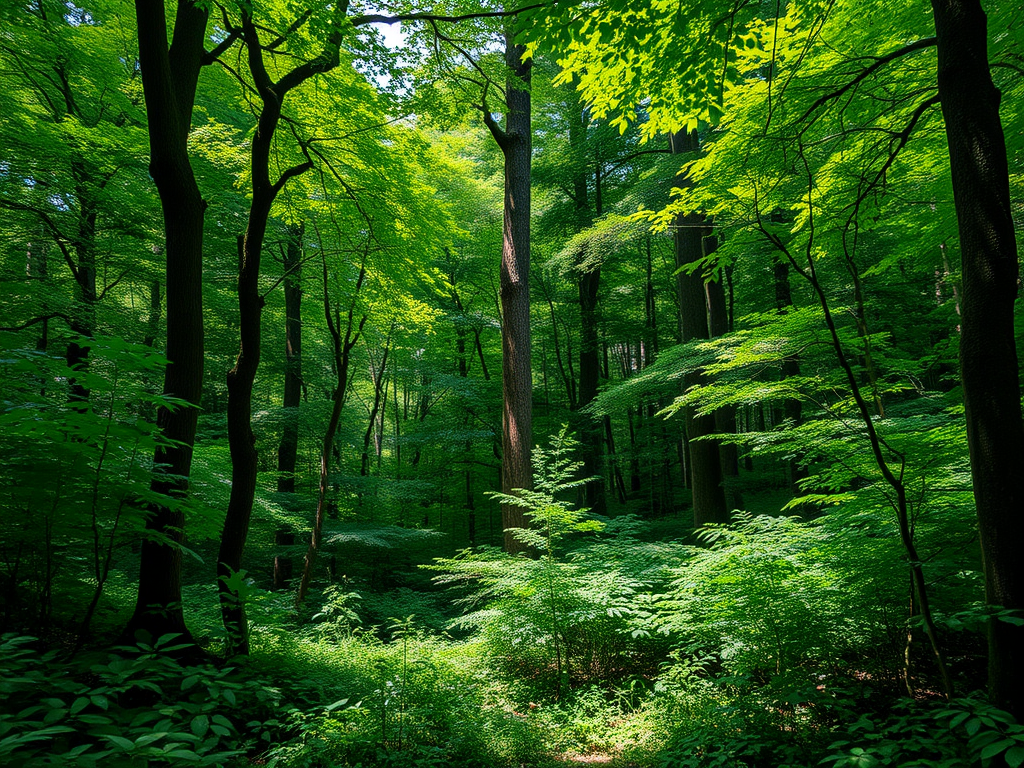
Miyawaki was an advocate for restoration of natural forests. At Yokohama national University, he developed, tested, and refined a method of ecological engineering today known as the Miyawaki method in the 1980s. The forest can be grown in small patches of land in urban areas making use of native or local seeds and saplings. Being in a small area, the plants and trees grow upwards towards the sunlight, providing green patches in dense urban areas. The Miyawaki forest is being implemented in many countries, including many cities and projects in India.

The first step in growing a Miyawaki forest begins with locating an area well exposed to sunlight that is at least three to four meters wide. Then the soil is prepared, using manure or organic fertilizers. Next step is choosing different native species of plant saplings for instance, neem, jamun, or timber trees, and local bushes and small plants like harsringar, flower saplings, guava or lemon. Ideally, different species of plants should be placed together so that no two saplings of the same species are planted together, with a distance of two feet in between. The saplings should also be planted in a multi-layer fashion beginning with a shrub layer (up to six feet), followed by a sub-tree (up to 12 feet) and tree layer (up to 25 feet), and ending with a canopy layer (up to 40 feet). The soil is then covered with dry leaves to retain moisture, and the patch is watered consistently
Within three years the trees and plants shoot up vertically straight, and thereafter the forest grows like in nature. Being bio-diverse it attracts butterflies and bees, benefitting the surrounding eco-system.

The Miyawaki forest in Ekta Nagar is already green and lush. Walking around noon on a hot day was a pleasant experience as the greenery brought the temperature down and provided shade. In urban areas it is something to think about – growing a small forest as a community to better living conditions and contribute to saving the planet in a small but significant manner.
Published in Lokmat Times in April 2025

 themindprism - sadhna shanker