
A bunch of samples in canisters lie in wait on the red planet surface. They are samples collected by Perseverance, the Mars rover, sent by NASA in 2021. Its main job was to look for signs of biology on the Martian terrain, which would then be brought back to Earth for further study. In September this year, NASA announced an exciting discovery by Perseverance. It was the discovery of a ‘potential biosignature’ in a rock sample found on Mars.
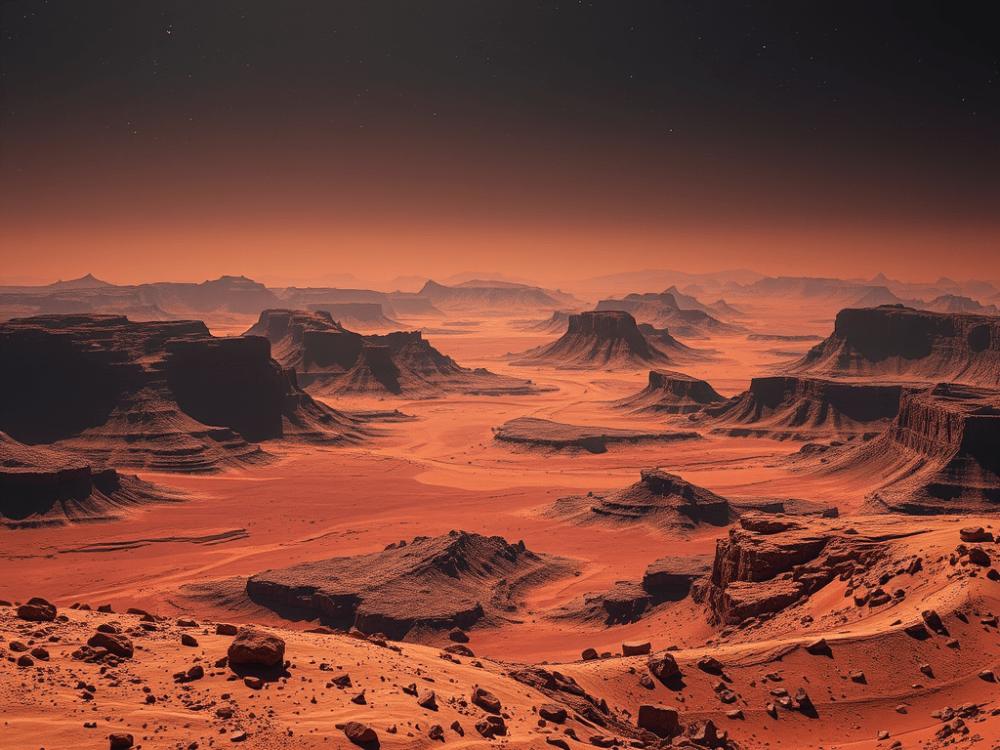
Today, we know Mars as a cold, dry and desert planet. However, billions of years ago there is evidence that it had a thick atmosphere and water, making it possible that life existed there. Perseverance has spent the last four years exploring a region called the Jezero Crater, which was once an ancient lake with a river flowing into it.
The rover found the sediments last year at the bottom of a canyon. They are about 3.5bn years old. The rover’s onboard lab analysed the minerals in the rocks, and beamed the data back for study. The sample christened ‘Sapphire Canyon’ found in an area called ‘Cheyava Falls”, was distinct because the formation’s sedimentary rocks are composed of clay and silt, which, on Earth, are excellent preservers of past microbial life. These organic molecules could come from nonbiological sources too, but the spots on the rocks called ‘leopard spots’ make scientists believe they could be produced by chemical reactions that might be associated with ancient Martian microbes.
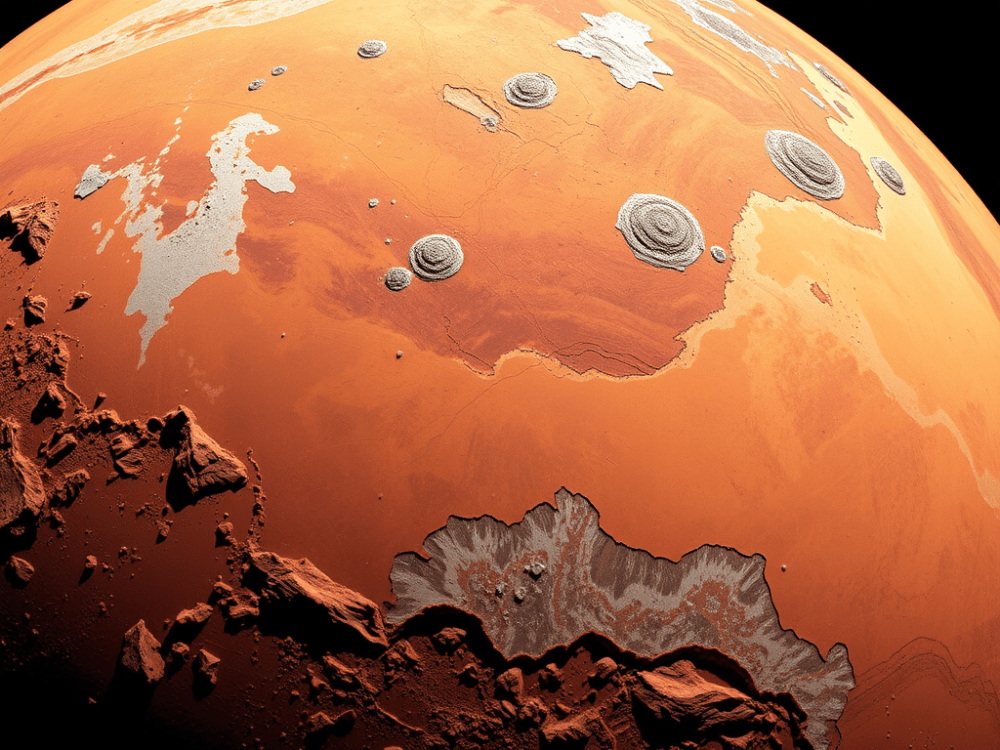
Although non-biological processes could also have similar chemical effects, they would need very high temperatures and the sediments do not seem to have been exposed to such temperatures. Hence, the excitement and importance of the this discovery.
The proof of the biosignature will come only once the samples are picked up from Mars and brought back to earth. And that is an expensive process. Both NASA and ESA have announced Mars sample return missions, but they are still uncertain. China has planned its own Mars sample return mission in 2028.
Whether the red planet supported life in some ancient past is important for humanity, as it would give us hope. Mars has become the symbol of the interstellar quest of humanity. An unspoken acknowledgment seems to exist that the future of humans lies in moving away from an Earth that is slowly giving way. So space has become the new race between nations. Earlier space exploration was often a collaborative effort between countries across the globe; however that seems to be a thing of the past. Countries and corporations are now competing in the space arena.
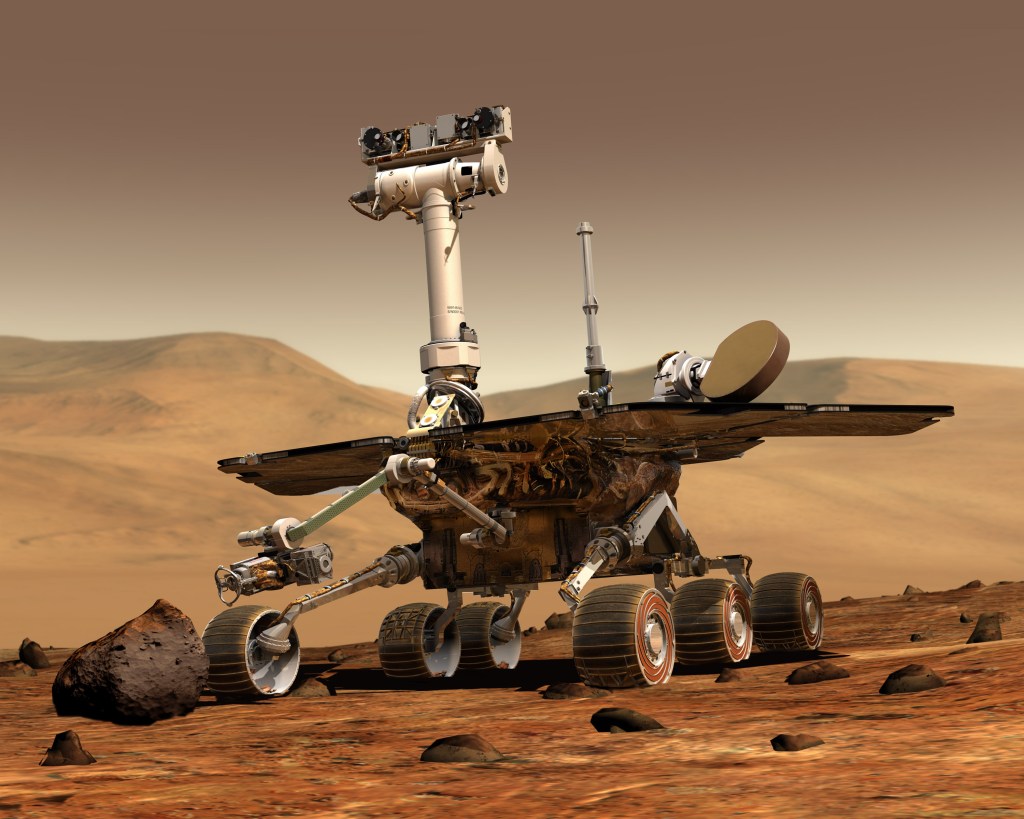
Who will bring back the samples first, who will find a way to land humans on Mars first – every step is now a chase. In a world grappling with the AI avalanche, the interstellar quest is gaining momentum. The next decade will see many competing players transform life as we know it.
Published in Lokmat Times in September 2025

 themindprism - sadhna shanker