
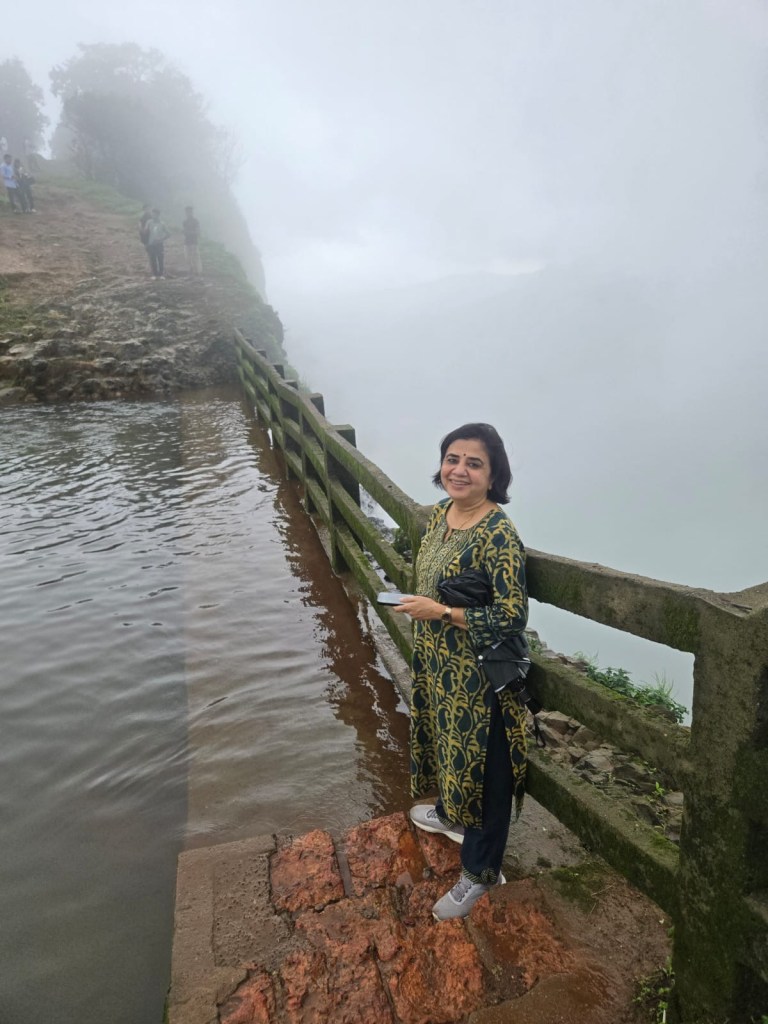
The sweet moist air swept through my being, as clouds enveloped around as we walked a small road in Amboli. A destination not familiar to people in the northern part of our country, it is a small town in the Western Ghats about an hour and a half from MOPA airport, Goa. At an altitude of about 700 metres above sea level in the Sindhudurg district, it is quaint, small and yet not subject to tourism overload.
For someone like me, the break from Delhi’s polluted air and heat was wonderful. In the monsoon, Amboli ghat is lush green, sprouting mesmerizing water falls along the green mountain sides. Its unique misty clouds that chase, surround and disappear with a gust of wind make the place mysterious, romantic and meditative at the same time.
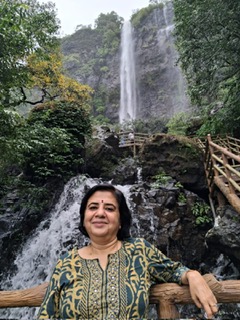
Monsoon tourism is on ample display as people drive up in cars, two wheelers or come by bus. Getting drenched in the rain as they walk, splashing in muddy waters in the fields that line the road and soaking in small pools near waterfalls fully clothed is a regular sight. When we visited the origin of the Hirnyakeshi river near Amboli it was pouring. People were walking the mandatory path getting drenched and enjoying the rain, while we were protected by umbrellas!
If you drive around Amboli area you will see a sign on nearly every house, structure and hamlet ‘Rooms Available’. We were told that in the monsoon nearly every home lets out rooms to travellers. There are a few resorts around, and many seemed to be coming up. That was a slightly distressing idea, because Amboli and the surrounding ghat need to avoid the over-construction and overcrowding that some northern India hill stations are plagued with. The Western Ghats, a UNESCO World Heritage Site since 2012, are one of the world’s eight biodiversity hotspots, known for their unique ecosystems, high endemism, and ecological significance. Amboli ghat, as a part of this extensive
range, plays a crucial role in sustaining this ecological richness. Along our drives through the ghat we spotted many monkeys, a fox and an active rust coloured Giant Indian Squirrel. ‘Shekaru’ as the latter is locally called, is the State animal of Maharashtra. It was playing and eating atop a tree oblivious to the hordes of monkeys loitering around. This abundant bio-diversity, rain forest ecosystem and the local lifestyle around Amboli needs to be preserved
Many cities across Europe, struggling with over-tourism are now taking proactive steps to restrict tourism. Cities are levying tourist taxes, banning short term tourist rentals, and launching initiatives like “Respect the city’ to ensure that heritage is protected and local lives are not disrupted.
As we left Amboli after our three day sojourn what stayed with me was its moist, green, misty landscape imbued with an aura of serenity and beauty that is so hard to find these days. Before such pristine and yet untouched destinations become over constructed and overcrowded, steps are imperative to preserve them. Development of tourism infrastructure in a planned manner and eco-friendly sensitivity of visitors would be a first step, if such areas are to maintain their cultural heritage and local flavor.
Published in Lokmat Times in July, 2026


